This morning David called and he can't find a house in Louisiana, so it looks like a tiny apartment instead, I tripped over a brick in the "road" if you could call that, and embarrassed myself in front of hundreds of people, and I had to interview 8 kids and it made me sad. Boo the 5th of July. The only good thing is that my dear friend Christina Munoz was born on this day 21 years ago. Happy Birthday, Tina.
So back to the interviews. There is nothing take makes me mean more than people being mean to defenseless kids. Several of the children I talked to today were consistently beaten, screamed at, locked in a room all day, abused, given scraps to eat, and one even jumped out a window and almost broke her ankle so she could escape. One of them had lost his entire family to an illness and was consistently depressed b/c he had to change employers 3 times in 7 months b/c they are mean and don't give him enough to eat. One girl's mother said she was taking her to see her sick grandmother and left her with an abusive family that keeps her from school to watch their two children with one on the way (she is 11 years old by the way, she's been working for them since she was 8!!!!). I've interviewed 12 kids in two days and it's been hard to listen but not as hard as it must have been to go through it. I get so angry when the kids are talking that I want to go buy a baseball bat and show their employers what its like to have someone bigger than you beat you up.
I finished editing this start-up NGO's report last night and spent four hours with them trying to formulate a strategic plan. To be honest, I think they are optimistic and haven't done research on things that work. They just read my report and now they want to try putting money into parent's saving's accounts, a suggestion I had written based on success in Brazil with this program. He then asked me if I could convince 100 of my friends to give 50 dollars a month, and I told him that was a lot, but he didn't think it was for Americans. They are nice people, and they have good hearts, but I think it will be a painful learning process for them.
Anyway folks, I'm tired and hungry and my ankle hurts (and my pride) from falling in the street, so goodnight and stay on your feet.
Thursday, July 05, 2007


Tuesday, July 03, 2007
I come from the future, where it is the 4th of July right now

In the future, fireworks look like those toys you used to get in Rice Krispies that climbed down walls: Wacky Wall Walkers, if you don't remember them, click here.

And in the 7th inning....
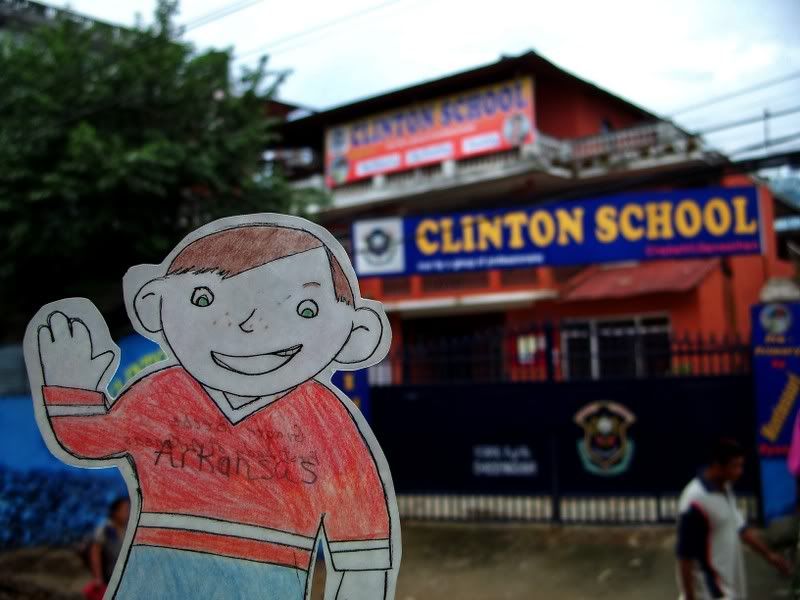
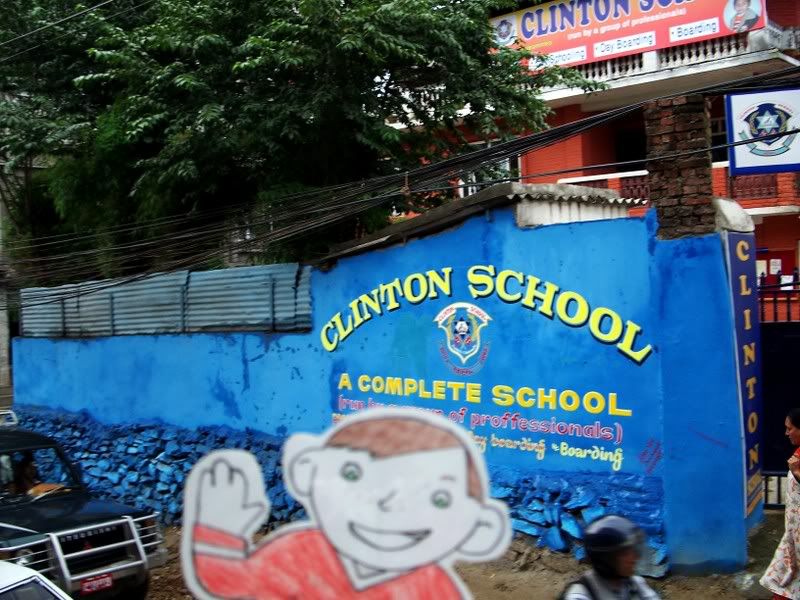
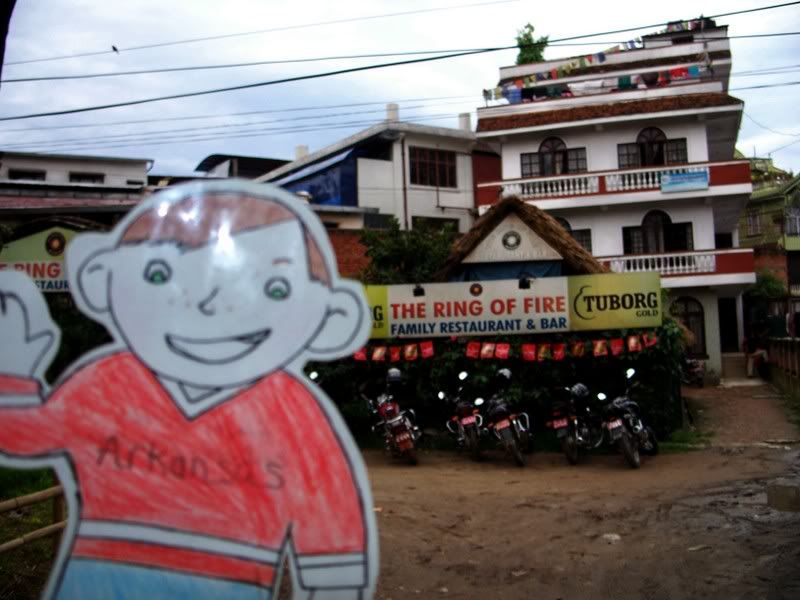
Take that team Kosovo. It looks like team Nepal is coming in from behind with Flat Stanley with, what appears to be a “Clinton School” and an homage to Arkansas’s favorite musician, Mr. Johnny Cash. This is becoming a pretty exciting match. I think what’s on everyone’s minds is, “Where’s team
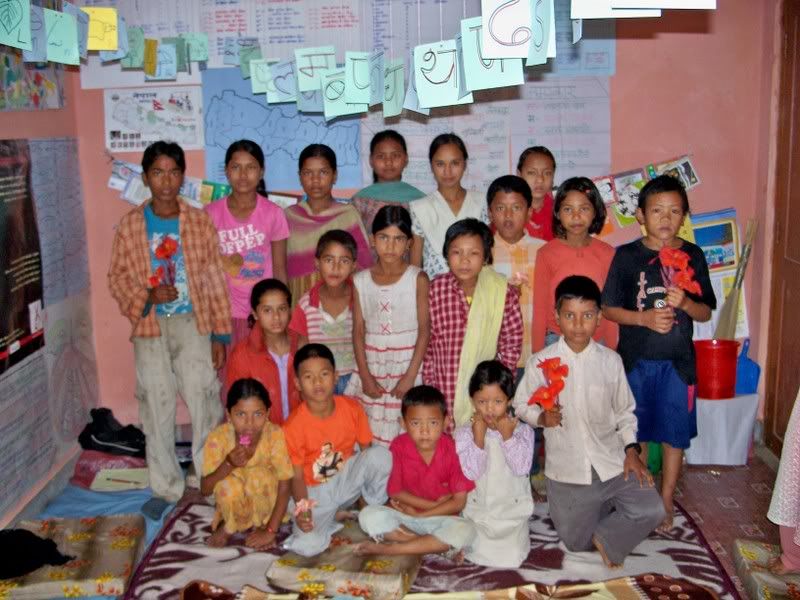
Case story no. 10: Parbati
Parbati is 14 years old. She is very pretty and seems quiet. Before the interview she sat in the corner and softly read three or four books aloud while we spoke to some of the other children. When it was her turn, she quietly got up and sat down next to us. She is from the Dang district and she has no parents anymore. When you ask her how many people are in her family, she says “Now there are only three.” Her 17 year-old sister is married and lives in
Parbati’s mother died when she was very young. She can barely remember her mother anymore. Her father sent her to work in
She doesn’t mind her work. It gives her a place to stay, food and an income. She lives in Chakrapath and takes care of her employer’s child, who has a disability. After tending to the child, she cleans, cooks and does the other household chores. She says her employers are very good to her. They love her and take good care of her. When the CWISH facilitator asked if Parbati could come to the DIC her employers quickly agreed. Since that day, she has been attending the DIC for 8 months.
When we ask Parbati if she likes school, her quiet face lights up. “I love school,” she says. “Before I came here, I couldn’t even recognize the letter A. I used to look at the back of tea boxes, where the instructions on how to make the tea are, and stare at them baffled as to why or how anyone could write so many words about tea. Now I can read and write.” To demonstrate this she picks up a book and begins to read aloud from the pages, the entire time beaming with pride. “I never dreamed in a million years I would one day be able to read and write. It has completely changed my life.” She says that the math she is learning is helping her with her shopping. Her favorite subjects are reading and writing though.
Now that she has been at the DIC for 8 months, she has decided she wants to open a vegetable shop one day. She says she is much happier now, happier than she ever thought she could be.
I want to be around to watch the Southern kick in

Yesterday I said "Y'all have to help me eat all these mangoes." Later I said "The traffic's been backed up a ways." Oh Arkansas, how I miss you.
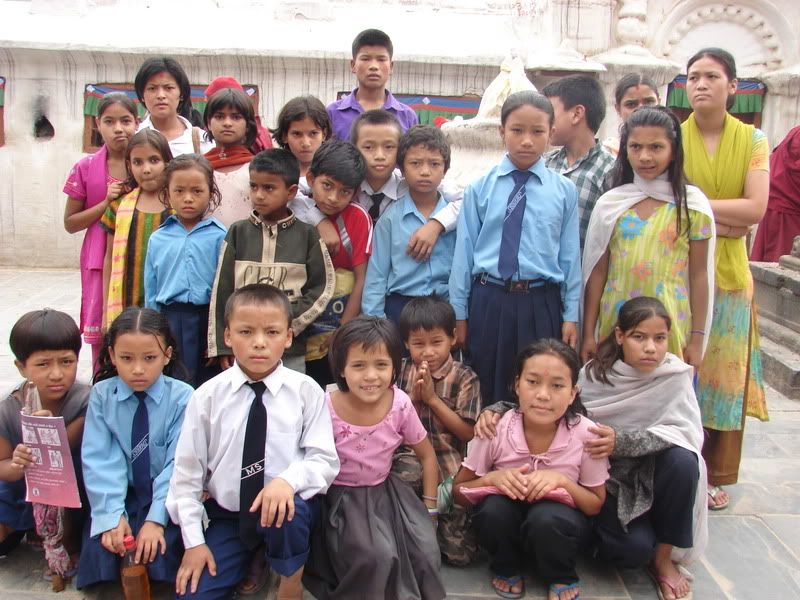
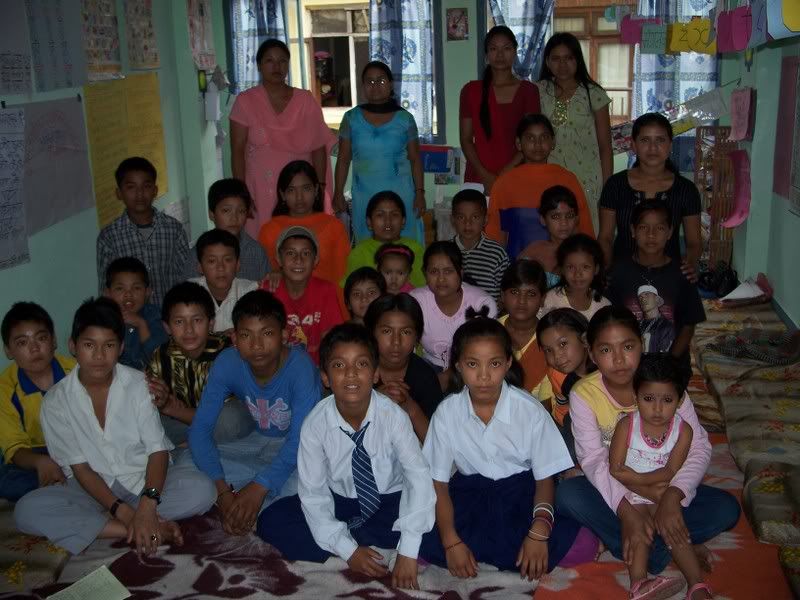
I'm really busy, so I'm just going to post a picture of me at work today. I got to interview 4 kids at the Basundhara DIC close to my house. I have to interview 41 kids by August 2nd and turn their interviews into stories, work with an organization called Room to Read to turn some of those stories into a children's book, Edit a report by the Alliance Against Child Labor and help them with their strategic plan, write the Literature Review and the Methodology for the School Health Report and a final paper for the Clinton School all by August 4th, when I will arrive in Little Rock at 11pm. Get 'er done (okay, that was too Southern)
P.S. you know how advertisements on gmail and photobucket cater directly to you? Lately I see advertisements like "get rid of nasty parasites" and "Big women are beautiful" I think the internet gods think I have a very strange eating disorder.
Monday, July 02, 2007
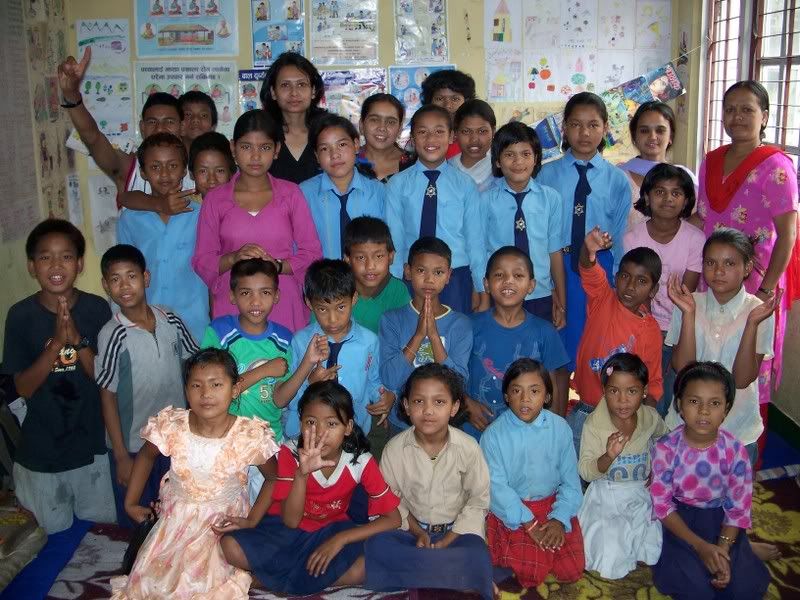

Sunday, July 01, 2007
A little bit about Child Labor in Nepal
To help you understand a little more about what I’m doing here. I’ve decided to give you a rundown on child labor in
CWISH focuses on Domestic Labor in the Kathmandu valley where there are approximately 83,000 domestic child laborers in
Child labor in
One out of every three 5- 14 year olds in
Typically 20-25% of household income is from child labor.
Of all child laborers in
Bonded and Domestic Labor
Bonded labor and domestic labor can be compared to slavery. Many bonded child laborers are working off a parental debt. It is estimated that there are 33,000 bonded child laborers in
There are approximately 83,000 domestic child laborers in
Child Trafficking
Child trafficking, particularly female child trafficking is a large problem in
prostitution in brothels reported an average stay of two years, an average of fourteen
clients a day, and 60% reported that their clients used condoms “sometimes”, “rarely”, or
“not at all”. The risk of contracting a sexually-transmitted disease (STD) is very high” (Gilligan, 2003, p. 9). Often the girls are sold with the consent of their parents and suffer marked physical, emotional and social consequences of their “work” (IPEC, 2001, p. 7).
Ragpicking and Porting
Ragpicking and porting can be very dangerous professions for children. Ragpickers sift through dumps to find recyclables. This can result in infections and injuries from items in the dump. This occupation also increases the child’s risk of drug use and illness (IPEC country profile, 2001, p. 6).
“Child porters face a number of serious health risks: increased heart, circulatory and digestive problems; tuberculosis; malnutrition and stunted growth; chronic leg and back pain; and a life expectancy shortened by as much as 20 to 30 years. The longer the distance, the greater the exposure to hazards. Long distance porters carry loads for many days (on average six), do not eat regularly and risk accidents on dangerous mountain paths (IPEC country profile, 2001, p.5).” In
Causes of the Child Labor Problem
Poverty
Poverty and parental debt often produce child labor (IPEC, 2001, p.14). The need for more income and an employer preference for children are both determinants. For employers, children are less troublesome, more trustworthy, more likely to do monotonous work, less likely to steal, less likely to miss work, can be exploited, and don’t form trade unions (Edmonds, 2003, p. 34). Unfortunately, child labor can cause lower wages, unemployment and under-employment for adults, perpetuating poverty (IPEC, 2001, p.14). Other factors that contribute to child labor in
Social Acceptance
Public perception of child labor can also be a cause. The culture of
Educational
Another significant problem is the focus on eliminating child labor without ensuring education access or lessened poverty (Shrestha, 2005, p. 7). Lire Ersado (2005, p.3) compared household survey data from
Children need to be rehabilitated, and social and educations programs need to be in place to ensure a successful transition from work to school (Gilligan, 2003, p. 14). NGOs can help in these arenas. Children who have to work but want to be educated have to choose between work or school because school schedules conflict with working hours. If a child has to choose between food and shelter or education, they ultimately choose food and shelter (Shrestha, 2005, p. 8).
The award for best email ever goes to....

"Dear Aunt Chandle,
I am having a good day. I was having fun with Jed. My mom works at
nights and mornings,not a long night just a little night. I like helping my
mom and Joe work. Sometimes I give Isabella her bottle but it is hard. I
saw StarWars stamps at the post office. I haven't got to go swimming it has
rained alot. I love you and miss you. I got to ride with papa on the big
backhoe. I want to run fast like David.
Love,
Ashur"
I swear that kid is growing like a weed. I miss you too, Buster.
Friday, June 29, 2007
Go to your room

I went in to work yesterday, but everyone was so worried about me they told me not to come back today. I'll start interviews again on Monday. I've finished a first draft of the entire school health report, the newsletter is finished, now I need to interview 45 child workers and make a book out of it. Milan also mentioned a start up organization that is focused on child labor asked for someone from CWISH to look over a report they recently completed, so I'm doing that as well. I'm coming home in 36 days. I can't wait to see all of you, but I still have a lot of work to do here. I know I've been really sick, but I've read three books, played a million games of spider solitare and slept enough for a month. I'm ready to get back to work.
This picture of me is terrible, I have big hair (notice the gray coming in?) and it's blurry, but I can show off the 15 pounds I've lost, who cares if it was a parasite.
Thursday, June 28, 2007
Back in the Saddle

I'm back at work today and feeling much better. I've definitely lost 15 pounds since I've been here, but it's not a fun way to lose weight. Last Night we had pumpkin vines and rice for dinner and I could only eat half, imagine that. Milan is doesn't want me to go out into the field so I finished up what I could on the school health report. I thought I'd post a quick picture of the Himalayas poking out above the clouds from my flight home on Sunday. I changed everyone from the Clinton School's blogs to CSPS, so If you want to see what other idealist are doing in Nicaragua, Vietnam, Malawi, Rawanda, Argentina, Tanzania, Kosovo and NYC check out the links.
Subscribe to:
Posts (Atom)


